วันพุธที่ 14 เมษายน พ.ศ. 2553

How to Make an Authentic Greek Salad

How to Make an Authentic Greek Salad***Greek food is renowned for its simplicity, and the authentic Greek salad is no exception. It is simple to prepare, using simple fresh ingredients....

How to Make an Authentic Greek Salad

The Greek salad is the quintessential Greek lunch enjoyed sitting in the sun at gingham laid tables overlooking the turquoise waters of the warm Mediterranean Sea. It evokes the senses: pleasant memories of warm sunshine, fresh herbs, tasty tomatoes and cheeky but handsome waiters.
Greek food is renowned for its simplicity, and the authentic Greek salad is no exception. It is simple to prepare, using simple fresh ingredients. But how can you recreate the authentic Greek salad when you are back home? It's worth doing, because this simple dish is tasty, healthy, and evokes those memories of vacations by the sea. But it's important to get it right.

So let's do it!

To be as authentic as possible, it is important to try and use the freshest, tastiest ingredients just like the Greeks would do. The problem is, many of the ingredients we have available are forced-grown, and often inorganically grown. This affects the quality and also the taste. Many restaurant owners in the resorts in Greece are farmers too (or their cousin Kostas is.) The ingredients they use would often be picked that day from their own farms, organically grown and nurtured by Nature.

The best we can do in our home country, is try and get fresh local ingredients from local shops who advertise local produce, or genuine farmers' markets -- or grow our own! However, the one thing we must accept is that the prime ingredient, Feta cheese, must come from Greece itself -- because if it doesn't, it isn't Feta.

Ingredients

? red onion

? a long cucumber

1 red and 1 green pepper (capsicums)

1-2 big soft red tomatoes

A big rectangular slab of Feta Cheese

Extra Virgin olive oil

Oregano

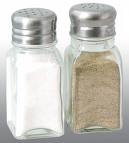
Salt and Pepper
Lemon juice (if desired)

Some local variations include capers (Santorini), and a softer, less salty cream cheese instead of feta (Crete).

Method

This is a salad remember, so it's not complicated. But here a few tips.

Take the ingredients (except the feta) out of the fridge about 1 hour before you make up the salad. Salad vegetables always taste better when not fridge cold, especially tomatoes.

Use local, organic produce for the best taste.

Use extra virgin olive oil, again for the taste.

The Greeks generally peel the cucumber, so why not do the same?

Chop the vegetables into fairly decent-sized chunks and mix gently. Season with salt and pepper, and drizzle with plenty of olive oil, and a little lemon juice if you want to.

Pop the slab of feta on the top and drizzle with more oil, then sprinkle with oregano.

Have a good chunk of granary bread handy, because there'll be some lovely olive-oily juice at the bottom when you finish.

A soft, light white wine goes well with this authentic Greek Salad!
By Graham Yates
Article Source: http://EzineArticles.com/

Italian Pizza - Its True Story Revealed

Italian Pizza---Pizza has a long history in Mediterranean food....Pizza as we know it with its characteristic covering of a tomato based sauce only came into being after the tomato was imported into Europe from the Americas....

Italian Pizza
Its True Story Revealed

Pizza is the most ubiquitous of fast foods. It can be bought everywhere. It has a soft base and is loaded with a variety of cheeses, meats, salamis, fish and even pineapple. But this modern Italian-American pizza is a far cry from the original pizzas.

Pizza has a long history in Mediterranean food. It goes back to the kind of flat bread that was made and sold all over the Mediterranean and Middle East. Flat bread of this kind would often be spread with oil and seasoned with olives, garlic and herbs, or dates.

Flat bread is still often served for breakfast in the Mediterranean. Originally the main meal would be served on bread of this kind. It could also be used for scooping food out of a common dish like the modern Indian paratha bread.

In Italy flat bread of this kind became known as pizza. The word was also applied to sweet dishes made of flaky pastry.

Pizza as we know it with its characteristic covering of a tomato based sauce only came into being after the tomato was imported into Europe from the Americas. The legend that the pizza was invented by Marco Polo who missed the Chinese green onion omelettes he had enjoyed in China is probably untrue.
In the course of the eighteenth century the poor of Naples began to season their flat bread with tomato. As Naples began to attract tourists so interest in the local specialties grew. The first pizza restaurant was set up in Naples in 1830. From there the pizza has spread all over Italy and the rest of the world as migrants from Southern Italy have taken their cuisine with them.

Pizza began to appear in the USA during the nineteenth century. It was sold in the streets of cities that had large Italian populations such as New York, Chicago, San Francisco and Philadelphia. The first pizzeria is thought to have opened in New York at the beginning of the twentieth century. Lombardi's in Manhattan claims to descend from this original pizza restaurant.

After the Second World War pizza began to become a genuine international food. New varieties of pizza began to appear and the big commercial chains of pizza restaurants began to appear.

The idea of the take away pizza began to emerge and the pizza began to encapsulate all that is enticing and excessive about modern convenience food. Customers could demand any topping they wanted. They could consume vast amounts of fatty cheese and meat. Like the hamburger a once simple food has become a source of obesity and ill-health.

There is no reason for a pizza to be unhealthy. Eaten in moderation and not dripping in high fat cheese and meat it can be a healthy food. Getting back to its roots is surely the way for pizza to go in the future.

Purists claim that there are only two kinds of authentic pizza: the Marinara and the Neapolitana. They are both covered with tomato paste and mozzarella but the Marinara has anchovies added. Both can be seasoned with oregano, basil and pepper.

The base of a traditional pizza is typically much thinner and crisper than that of commercial pizzas available elsewhere. This base is brushed with a light coating of olive oil and spread with tomato paste. It then has rounds of fresh mozzarella added. The grated mozzarella often served even in Italy tastes nothing like the real thing. The masses of cheap grated Cheddar type cheese that is often used in commercial pizzas is an abomination and should be avoided. It has no flavour and is high in heart-stopping cholesterol.

A few anchovies can be added before the whole thing is baked quickly in a wood fired oven. When it comes out of the oven a few basil leaves can be scattered on it. The whole result is light, crisp and flavoursome.

Those who have tried a traditional pizza baked in a wood fired oven, especially if it is fired with vine pruning, will seldom willingly go back to the commercial kind. At its best the pizza, especially when eaten out of doors on a summer evening with friends and a bottle of red wine captures the essence of simple rustic fare.

Abhishek is really passionate about Cooking and he has got some great Cooking Secrets. up his sleeves! Download his FREE 88 Pages Ebook, "Cooking Mastery!" from his website http://www.Cooking-Guru.com/770/index.htm. Only limited Free Copies available.
By Abhishek Agarwal
Article Source: http://EzineArticles.com/

Preparing a Thanksgiving Menu - How To Create The Perfect One

Cooked meats and delicatessen items are essential for snacks as well starters. You can even make a whole dinner out of ready prepared foods from the delicatessen with the addition of perhaps one simple cooked course.....

Preparing a Thanksgiving Menu
How To Create The Perfect One

Everyone is home for the holidays. Or are they? Will the kids make it? What about unexpected guests? Here is the first hurdle in preparing for Thanksgiving. It is not so much a meal as a running feast. Old friends who were just passing through ring up and drop by at the last moment. The kids bring friends home. Guests you had counted on get snowed up or stuck in a fog bound airport.

You need snacks at a moment's notice. You need hot food. You need cold food. There must be early morning breakfasts for those who are going out to play football and mid morning brunches for when they come back. There are late lunches to leave the morning free and early lunches to leave a clear afternoon. There are afternoon snacks to eat in front of the television. There are nibbles with drinks for visitors. There are late suppers when the fog bound travelers finally make it over your threshold.

Oh, and there's the Thanksgiving dinner. Pride of place in this holiday season of eating must still go to the great feast itself. The turkey and all the rest of the festive fare must look, smell and taste so appetizing in the midst of this plenty that every guest will feel they have participated in a special day.

The first thing is to plan ahead. Make a shopping list and a menu. Plan what meals and snacks you will need for the whole holiday. Make sure you have food on hand for the unexpected guest. The essence of Thanksgiving is hospitality.

In any holiday season the food we most often run short of is the simplest food. Make sure you have enough of the basics in the house so you can rustle up a quick meal. Check that you have bread and milk, eggs and flour, pasta and rice. A little tin of anchovies and some garlic will make a wonderful pasta dish in a hurry if someone turns up unexpectedly.

Cooked meats and delicatessen items are essential for snacks as well starters. You can even make a whole dinner out of ready prepared foods from the delicatessen with the addition of perhaps one simple cooked course.

The Thanksgiving meal itself should be planned in advance. Think about the menu and design it around your guests. You may have children to cater for, or vegetarians. Are there old family favorites that can never be left off the Thanksgiving menu? Even if you have cooked a Thanksgiving dinner twenty times it is always worth planning the menu.

Make a timetable so that you know when to put the turkey in the oven and when it will be done. If you have limited oven space it is essential to plan cooking times so that you can make a range of dishes. Stuffing and accompaniments can be cooked ahead of time and reheated before serving. Fresh vegetables are best cooked just before serving.

Timing is everything in preparing a Thanksgiving meal. Your aim is to bring it all together at the same time. If you are not used to cooking big meals with several courses then a timetable is essential.

Do not think of your timetable as a rigid master plan. You should see it as a guide to what you do on the day. If you have friends and family round they will probably want to help in the kitchen. That is all part of the season. If you are an experienced cook they may seem more of a hindrance than a help. But this is Thanksgiving. If you have your timetable stuck up on the fridge you can pick out a job that is suited to your helper's skills.

Children can mix and blend. Their attention span may be limited. This is not an efficient way of cooking. But they are creating memories, yours and theirs, as much as food.

Even the least skilled helper can certainly keep your glass filled with wine and regale you with conversation while you cook. The cook should not be engaged in a lonely battle with the turkey at Thanksgiving.

Abhishek is really passionate about Cooking and he has got some great Cooking Secrets. up his sleeves! Download his FREE 88 Pages Ebook, "Cooking Mastery!" from his website http://www.Cooking-Guru.com/770/index.htm. Only limited Free Copies available.
By Abhishek Agarwal
Article Source: http://EzineArticles.com

How To Eat Spaghetti Without Making A Mess

How To Eat Spaghetti Without Making A Mess....In Italy spaghetti used to be sold in metre lengths. It was kept in a drawer and the shopkeeper would break it in two so that it could be carried home more easily.....

How To Eat Spaghetti Without Making A Mess

Spoons are for children. All the professionals agree. You should never eat your spaghetti with a spoon.

The correct way to eat pasta is with the fork alone.
Yet thirty years or ago it was accepted, in America at least, that the correct etiquette when eating spaghetti was to twirl the pasta around the fork using the spoon.

The spaghetti was eaten from the fork not the spoon.
Nowadays there is a certain degree of snobbery about this method. Today those in the know prefer to use just a fork alone and deride those who use the spoon as well. The reason for the change in spaghetti eating etiquette is that the wide bowls that are now commonly used were once a rarity in both restaurants and homes outside Italy. Pasta was frequently served on a flat plate which made the spoon essential for spaghetti. With a bowl there is no need for a spoon.

You can wind the pasta against the edge of the bowl.
The idea is to use the edge of the bowl to allow you to twirl the spaghetti around your fork. That's fine if your pasta is served on a bowl rather than a plate. Even so it takes some practice. The key thing is not to get too much spaghetti on your fork in one go. Just a few strands are enough. Twirl your fork around until the whole length of the spaghetti is gathered up, then bring it up to your mouth. If you notice that there is too much spaghetti on your fork or the ends are dangling then lower your fork and start again. You will only get into a mess with spaghetti if you leave those ends dangling. If you try to suck them up like the dogs in The Lady and the Tramp you will splatter sauce all over yourself.

Oriental noodles are made to slurp and are served in a bowl that you can pick up for that reason, spaghetti is not. In Italy spaghetti used to be sold in metre lengths. It was kept in a drawer and the shopkeeper would break it in two so that it could be carried home more easily. Today in Italy, spaghetti is sold in shorter lengths as it is everywhere in the world so there is no need to break it up before cooking. If spaghetti is cooked correctly it should wrap around your fork easily. If it is overcooked it is more likely to slide off the fork or refuse to stay wrapped around it. This is why spaghetti is often difficult to eat when it is served outside Italy.

So spaghetti should be eaten with a fork. However, a spoon m
ay be provided even in Italy. This is not like the fork that is provided in Oriental restaurants a concession to foreign ineptitude. The spoon is to allow you to toss the spaghetti in its sauce and to scoop up every last drop of that sauce. Opinions differ on whether it is correct to use bread to mop up the sauce. Some authorities regard serving bread as a feature of impoverished households, others accept that today it is normal in restaurants. When the bread if a good quality ciabatta or focaccia it would be shame to pass up the opportunity of enjoying it with the sauce in the name of out moded etiquette. Even the most punctilious spaghetti cook would be offended if you failed to enjoy the meal they had so carefully prepared. A foreigner will surely be forgiven for using a spoon to help them twirl the pasta around the fork or a piece of bread to finish the sauce if they express a proper appreciation of both spaghetti and sauce.

Abhishek is really passionate about Cooking and he has got some great Cooking Secrets. up his sleeves! Download his FREE 88 Pages Ebook, "Cooking Mastery!" from his website http://www.Cooking-Guru.com/770/index.htm. Only limited Free Copies available.
By Abhishek Agarwal
Article Source: http://EzineArticles.com/

Home Cooking - Easy Tips To Get Authentic Flavor In A Short Time

Home Cooking***A ready prepared pack of root vegetables and some beef, pork or lamb will make a casserole that can be left to cook all day in your crock pot or slow cooker.....

Home Cooking Easy Tips To Get Authentic Flavor In A Short Time

Even the best cooks cut corners sometimes. Time is short in the modern world and we all need some quick easy recipes and techniques if we want to cook at home.
A great deal of the time involved in cooking is actually spent in washing up afterwards. So some of the best quick and easy techniques involve avoiding making more mess than necessary. Use foil where ever you can in roasting trays and griddles. The foil can be removed and thrown away so that food never gets burned onto the pan. Try using platic bags for marinating food. That way you will not have another dish to wash. In the microwave try using Teflon coated paper or baking parchment to cover the carousel plate.

Do not dismiss good quality frozen produce. Even frozen mashed potatoes have their place in the modern kitchen. Some left over cooked ground beef or lamb can be turned into a shepherd's pie very quickly and easily by adding a topping made of frozen mashed potatoes. You can even use frozen mashed potatoes as a quick and easy way to thicken a home made soup. Frozen herbs are extremely quick and easy to use because they save on all that chopping.

Ready prepared fruit and vegetables will also save you time. Many supermarkets stock ready washed, peeled and chopped fruit and vegetables. They are a quick and easy route to home cooking. Some ready prepared fruit, served with crumbled amaretti cookies and ice cream make a delightful, as well as quick, desert.

A ready prepared pack of root vegetables and some beef, pork or lamb will make a casserole that can be left to cook all day in your crock pot or slow cooker. This may not be quick in the conventional sense, but it is quick when you come home from work at the end of the day.

Some kitchen gadgets are immensely time saving. The crock pot is one of them. It takes a long time to cook a meal in one, but it is not your time. A few minutes work in the morning will provide you with a quick and easy meal in the evening.

A microwave oven is more obviously time saving. It cuts cooking times to a fraction of conventional cooking times. If you spend a little extra and get a combination
microwave that has a grill/broiler facility and a conventional heating element you will find that your microwave becomes even more useful. A combination microwave can be used for a whole range of dishes that require browning. It gives a better flavour while still saving time.

Another great time saver is the wok. A stir fry is probably the ultimate quick and easy recipe. You can get ready prepared vegetables and it is the work of a few minutes to prepare any one of an endless variety of quick and easy meals.


Abhishek is really passionate about Cooking and he has got some great Cooking Secrets. up his sleeves! Download his FREE 88 Pages Ebook, "Cooking Mastery!" from his website http://www.Cooking-Guru.com/770/index.htm. Only limited Free Copies available.
By Abhishek Agarwal
Article Source: http://EzineArticles.com/

Once A Month Cooking - How To Make It A Reality

Once a month cooking - who me? I don't have time. Once a month cooking sounds like an option for the stay-at-home mother rather than today's woman who juggles family and career and is more likely to found driving her kids to soccer practice than toiling away in the kitchen.....

Once A Month Cooking
How To Make It A Reality

Once a month cooking - who me? I don't have time. Once a month cooking sounds like an option for the stay-at-home mother rather than today's woman who juggles family and career and is more likely to found driving her kids to soccer practice than toiling away in the kitchen. It sounds like something that our mothers did not us.

But once a month cooking is a realistic option for a busy working mother. What is more it can save you money and make sure that your family gets nutritious food.

We hear so much about the problems of obesity and poor nutrition that results from a diet based on fast food. We know the virtues of good home cooking but finding time to do it is another matter. Once a month cooking offers a way of achieving that traditional ideal without spending every day in the kitchen. Once a month cooking offers a way of ditching the convenience food without becoming a stay-at-home mom.

Everything you need for once a month cooking is already to hand in the modern kitchen. You may need to invest in a few more freezer proof dishes but you already have the freezer and a cooker.

What you are aiming to do is to cook all the meals you need for a month and freezing them. We are talking about a weekend really. The whole family can get involved. It can become part of your family time. Measuring, weighing, mixing, planning and working as a team all make an excellent educational experience for the children. They get lessons in math and life skills as well as nutritious meals.

I mention planning, and this is the secret to cooking one a month. You need to plan your menus for the whole month. No one wants pasta Bologna ever day for a month so build in plenty of variety. Think about any special dietary needs that members of your family may have. The vegetarian daughter needs her meals too. The advantage of cooking once a month is that you can plan for your whole family and provide alternatives.

If you are cooking alternative options for some members of the family you need to think about portion sizes. Some individual dishes should be frozen as well as larger dishes for the whole family. One of the advantages of cooking once a month is that you have far greater control over portion size than usual. You can calculate the calories contained in a meal.

When you plan meals in this way you can ensure that you include enough fruit and vegetables. When you grab hurried meals it is all to easy to miss out on fruit and vegetables and essential nutrients. With once a month cooking you become aware of just what you are eating. Taking time to plan lets you make rational decisions and to discuss the health benefits of eating a nutritious diet with your children.

Once you have planned your menu you can draw up a shopping list. Taking a shopping list to the supermarket is one of the best ways of avoiding impulse purchases that pile on calories that are empty of nutrients. When your children have contributed to planning the menu they are less likely to demand treats.

Once you get used to the idea of once a month cooking you can plan little treats in the form of cakes and desserts. Even home-baked bread or pastries for those occasional lazy Sunday mornings can be included in your once a month cook. The advantage of once a month cooking is that you know what is in these treats.

Another advantage of once a month cooking is that you have much greater control of your budget than usual. There may even be things you can buy in bulk and make savings that way. Quite apart from what you save by planning your shopping you also save on the cost of gas by making fewer trips to the store. You benefit directly from that and the rest of the community benefits from less pollution. You may also like to consider whether it would be better to use a store that will deliver. Internet shopping and home delivery may the best option.

One word of caution: if your friends and neighbours get to hear about once a month cooking you may find that you have started an once a month cooking business.

Abhishek is really passionate about Cooking and he has got some great Cooking Secrets. up his sleeves! Download his FREE 88 Pages Ebook, "Cooking Mastery!" from his website http://www.Cooking-Guru.com/770/index.htm. Only limited Free Copies available.
By Abhishek Agarwal
Article Source: http://EzineArticles.com/

Cooking Italian Pasta - Simple Tips To Cook Pasta At Home

Cooking Italian Pasta***As with all the most basic foods the key to cooking good pasta is to choose good quality ingredients. The simpler the food the more important quality becomes. Poor quality can be less easily disguised in a simple pasta dish than in something more elaborate.....

Cooking Italian Pasta
Simple Tips To Cook Pasta At Home


Pasta is the simplest of Italian foods. It is the most widely known and can be found all over the world. But it is easy to go wrong with it and to end up with a soggy uninspiring mess.

As with all the most basic foods the key to cooking good pasta is to choose good quality ingredients. The simpler the food the more important quality becomes. Poor quality can be less easily disguised in a simple pasta dish than in something more elaborate.

Good quality pasta is made from durum wheat. Many people swear by fresh pasta rather than dried. They feel that fresh pasta must be more authentic than dried. But in Italy cooks will often choose dried pasta for preference. A good quality dried pasta made from durum what is always preferable to a poor quality fresh pasta.

What you are looking for is a dried pasta made with 100 per cent durum wheat and preferably made by an Italian company according to traditional methods. Avoid supermarket own brands and other cheaper substitutes. Only the real thing will do.

If this seems too expensive then save money when it comes to the sauce. Pasta is a cheap food because it carries the sauce and makes expensive ingredients go further. You should not think of pasta as an economical food because the pasta itself is made from cheap ingredients.

Some fresh pasta is excellent. If you can find shop where they make it themselves it is well worth buying. You might even like to try making it yourself. There are wonderful gadgets for rolling out sheets of pasta. But these pasta machines usually end up forgotten in the back of the cupboard. They are not really necessary. You will rarely find them in an Italian kitchen. Home made pasta can be made quite easily with a rolling pin and a knife.

Home made pasta is particularly good for filled pastas such as ravioli. You can make your own filling to your own taste that way.

Whether you make your own pasta, buy fresh pasta or dried pasta you will need a large pan in which to cook it. When I say large, I mean larger than you think. Most pans are too small to cook pasta successfully. The pan should be made of a material that is a good conductor of heat. Many stainless steel pans are not good conductors of heat and will let your pasta sit in the water going soggy.

The reason that you need a big pan for pasta is that the secret of cooking pasta is to have plenty of water. That way the individual pieces of pasta are kept separate and do not stick together.

The water must be brought to a good rolling boil before the pasta is added. Bring it back to the boil as quickly as possible after the pasta is added and keep it boiling until the pasta is done. Do not put a lid on the pan.

Salt is important in cooking pasta. The water must be well seasoned with salt for pasta. Without salt you pasta will be bland and dull.

Some people like to add oil to the water. They believe that this will stop the pasta sticking together. This is not true, because the oil stays on the surface of the water and does not touch the pasta. But oil can help to prevent the foam that is produced when cooking pasta from boiling over the side of the pan.

Most packets of pasta have a cooking time printed on them. Treat this as a rough guide only. You must judge whether or not the pasta is done by touch. Lift out a piece of pasta from the boiling pan and squeeze it between the nails of your thumb and forefinger. If there is still a slight resistance then the pasta is done. It is, as the Italians say, al dente. There is some "bite" left in it. Your pasta is then ready to serve with the sauce of your choice.

Abhishek is really passionate about Cooking and he has got some great Cooking Secrets. up his sleeves! Download his FREE 88 Pages Ebook, "Cooking Mastery!" from his website http://www.Cooking-Guru.com/770/index.htm. Only limited Free Copies available.
By Abhishek Agarwal
Article Source: http://EzineArticles.com